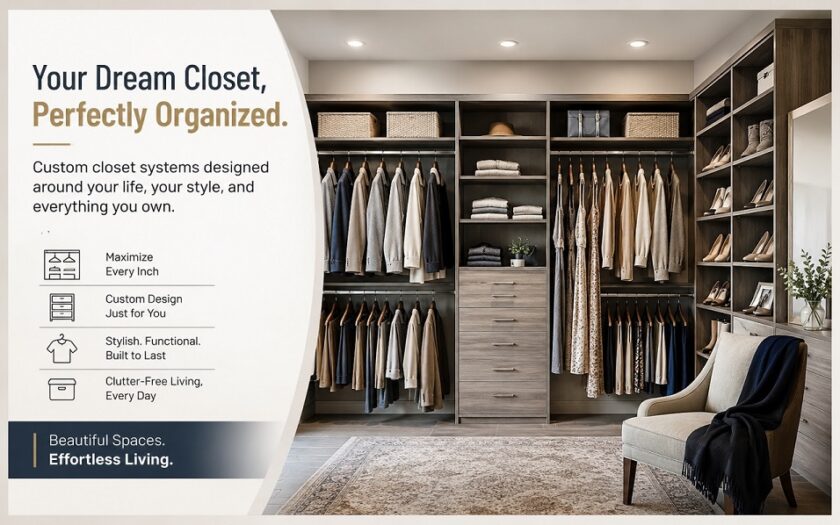
A cluttered closet is more than just an eyesore — it costs you time, energy, and peace of mind every single day. Whether you’re dealing with an overflowing wardrobe, a messy walk-in, or a cramped reach-in closet, the right strategy can completely transform your space. A well-planned closet system organizer is the single most powerful tool you can invest in to bring lasting order, functionality, and calm to your home. From decluttering and categorizing to maximizing vertical space and maintaining a seasonal rotation, this comprehensive checklist covers everything you need to achieve a truly clutter-free home.
Start with a Full Declutter Before Anything Else
Before you install a single shelf or hang a single organizer, you need to face the clutter head-on. Take everything out of your closet — every shoe, shirt, bag, and forgotten item hiding in the back corners. Lay it all out on your bed or floor and sort each item into four piles: Keep, Donate, Trash, and Relocate.
Be brutally honest with yourself. If you haven’t worn or used something in the past 12 months, it’s time to let it go. This purge process is the foundation of any successful closet transformation because it ensures you are only organizing items that genuinely belong in your space.
Measure Your Space and Plan Your Layout
Once your closet is empty and clean, grab a measuring tape and record the exact dimensions — height, width, and depth. Note the positions of any existing rods, shelves, electrical outlets, or light fixtures. Sketch a rough layout of how you want the finished closet to look. Think about what categories of items you store most: long hanging clothes, folded garments, shoes, accessories, or seasonal items.
Understanding your specific storage needs before purchasing any products will save you money and prevent the frustration of buying organizers that don’t fit. Planning on paper first is one of the most underrated steps in the entire process.
Choose the Right Closet System Organizer for Your Needs
Not all storage solutions are created equal, and selecting the right closet system organizer for your specific space is critical to long-term success. For smaller reach-in closets, modular shelving units with adjustable components offer the most flexibility. Walk-in closets benefit greatly from custom or semi-custom systems that include dedicated zones for hanging clothes, folded items, shoes, and accessories.
Consider systems that offer double hang rods for shorter garments like shirts and jackets, as this effectively doubles your hanging capacity. Wire systems offer affordability and airflow, while laminate systems deliver a polished, furniture-like look. Match the system to both your budget and your aesthetic for a result you’ll love every day.
Maximize Vertical Space from Floor to Ceiling
One of the most common mistakes in closet organization is neglecting vertical space. Most closets have at least 18–24 inches of unused space above the top shelf — prime real estate for seasonal items, luggage, or rarely used bins. Install a shelf above your main clothing rod to nearly double your storage capacity instantly.
Use stackable bins or clear storage boxes on high shelves so you can see what’s stored without pulling everything down. On the lower end, avoid letting the floor become a dumping ground. Shoe racks, cube organizers, and low-profile baskets keep the floor functional and clean. Thinking vertically turns even the smallest closet into a surprisingly spacious storage solution.
Organize Clothing by Category and Color
Once your system is in place, how you arrange your clothes matters enormously. Group items by category first — all tops together, all bottoms together, dresses, outerwear, and so on. Within each category, arrange by color from light to dark, or by sleeve length.
This dual-level organization makes it dramatically faster to find what you need each morning and easier to identify gaps in your wardrobe. Use matching slim velvet hangers throughout your closet for a streamlined, uniform look that also saves significant space compared to bulky plastic hangers. Consistent hangers alone can free up several inches of rod space in a packed closet.
Create Dedicated Zones for Shoes and Accessories
Shoes and accessories are the most common sources of closet chaos, so they deserve their own dedicated zones within a well-designed closet system organizer. For shoes, consider a slanted shoe shelf, clear stackable shoe boxes, or an over-the-door shoe organizer depending on your collection size.
Display shoes you wear frequently at eye level and store seasonal or occasion shoes in labeled boxes above. For accessories, use drawer dividers for jewelry, a dedicated belt hook or rack, and a scarf hanger or bin. Handbags do best on dedicated shelf sections with dividers to keep them upright and visible. Giving every accessory a permanent home eliminates the daily scramble to find that one earring or that specific belt.
Use Labels, Bins, and Baskets Strategically
Labels are not just for pantries — they are one of the most effective tools for maintaining long-term closet organization. Clearly label every bin, basket, and container so that every household member knows exactly where things belong. Use clear bins wherever possible so the contents are immediately visible without opening anything.
Fabric baskets work beautifully on open shelves for items like scarves, gym gear, or extra linens, while adding a soft, aesthetic touch. Shelf dividers are excellent for keeping folded stacks of sweaters or jeans from toppling over. The more intuitive your labeling and storage system, the easier it becomes to maintain — and the less likely clutter is to creep back in.
Rotate Seasonal Items to Free Up Prime Space
One of the smartest habits any organized person maintains is seasonal rotation. Your closet’s prime real estate — eye level and within easy arm’s reach — should be reserved exclusively for the items you use right now, this season. Off-season clothing, holiday gear, and specialty items should be stored in vacuum-seal bags or labeled bins on high shelves, under the bed, or in a secondary storage area.
Every change of season, spend 30–60 minutes swapping out what’s stored and what’s accessible. Not only does this keep your everyday closet feeling spacious and relevant, it also gives you a built-in opportunity to re-evaluate each item and donate what no longer serves you.
Add Lighting and Mirrors to Enhance Functionality
A well-lit closet is a functional closet. Many built-in closets suffer from poor lighting, which makes it difficult to distinguish colors, find items, and feel motivated to keep the space tidy. Add LED strip lights under shelves or along the ceiling for bright, even illumination. Battery-operated puck lights are an inexpensive fix for dark corners or shelf interiors.
A full-length mirror mounted inside the closet door or on an open wall turns your closet into a mini dressing area and reduces morning traffic in the bathroom. These finishing touches elevate the entire experience of using your closet from a chore to a pleasure.
Build a Weekly Habit to Maintain Your Organized Closet
The best-designed closet system in the world will fall apart without consistent maintenance habits. Adopt the “one in, one out” rule — whenever you bring a new item of clothing or accessory into your closet, remove one item of similar type to donate or discard. Spend five minutes at the end of each week returning misplaced items to their proper zones, straightening hangers, and clearing any items that have landed on the floor.
Once a month, do a slightly deeper tidy — wipe down shelves, check for items to donate, and ensure labels are still accurate. Treat your closet like a living system that needs regular attention, and it will reward you with effortless mornings, reduced stress, and a home that always feels in control.